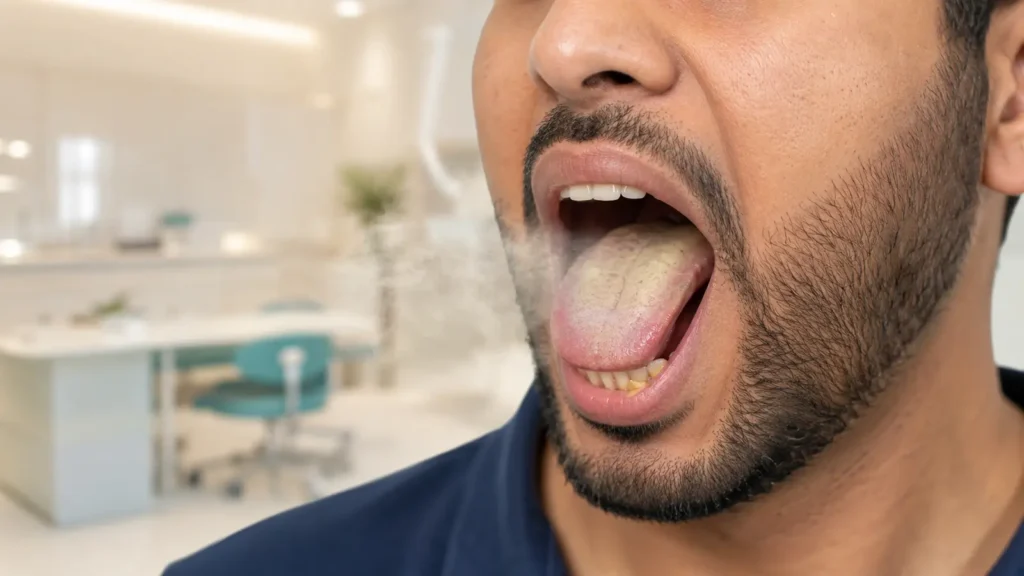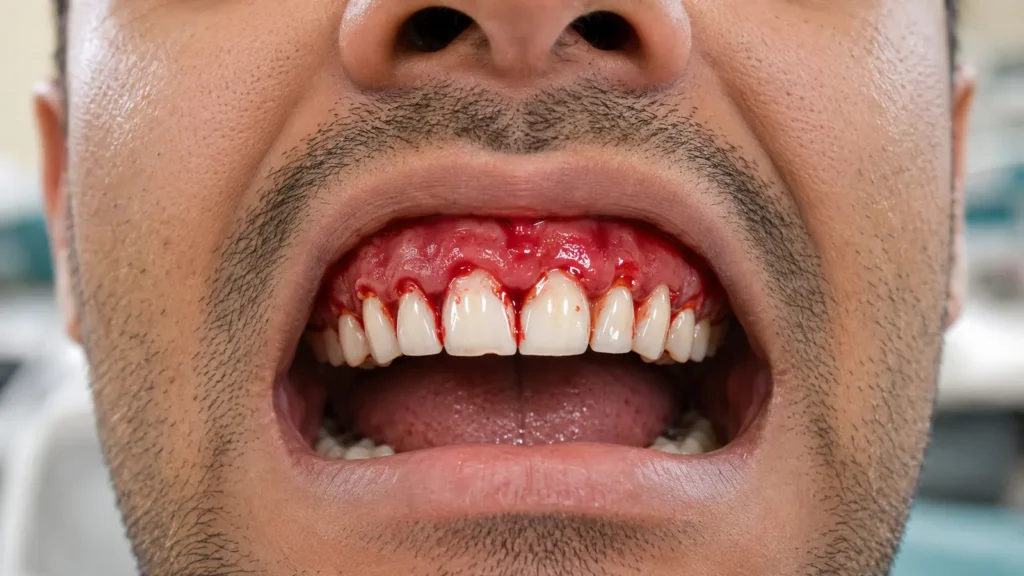

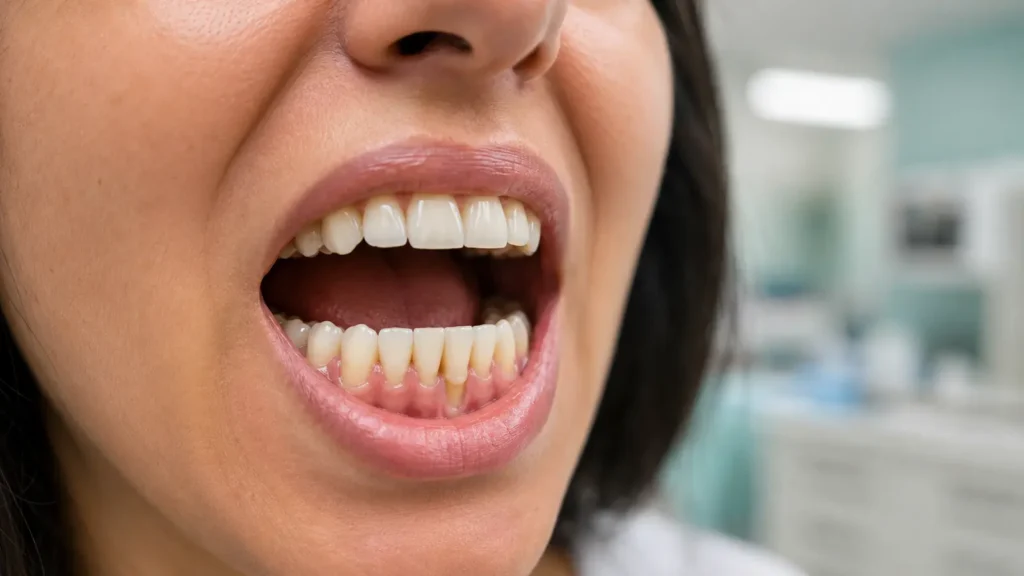
Gum recession is displacement of the gum margin away from the crown, exposing part of the root. It can affect one or many teeth and cause sensitivity, aesthetic concern or cleaning difficulty. Receded gum does not usually grow back by itself, but the cause can be controlled and suitable defects may be covered surgically.
What is the condition?
Recession is loss or apical movement of the gingival margin that increases the visible tooth length. It does not always mean periodontitis; traumatic brushing, thin tissue, tooth position and mechanical factors may also contribute.
Symptoms and signs
- A tooth looks longer than its neighbours
- A relatively yellow root surface becomes visible
- Cold or touch sensitivity
- A notch at the gumline
- Aesthetic concern or plaque retention around the root
Causes and risk factors
- Forceful brushing or a hard brush
- Periodontitis
- Thin gum phenotype or limited keratinised tissue
- Tooth position outside the bony envelope or previous orthodontic movement
- Frenum pull or repeated trauma
- Smoking and plaque-retentive restorations
When should you see a periodontist?
See a periodontist when recession progresses, sensitivity persists, root decay develops, or the site is difficult to clean. Early assessment can clarify root-coverage potential before additional interdental tissue is lost.
How is it diagnosed?
The clinician records recession depth, probing depth and attachment level, then evaluates tissue thickness, bone, tooth position and brushing technique. Radiographs are used when bone loss or periodontal disease is suspected.
Treatment options
- Correct traumatic brushing and other local factors
- Treat gingivitis or periodontitis first
- Desensitising toothpaste or professional fluoride
- Adjust a restoration or mechanical cause where indicated
- Gum grafting to increase tissue thickness or width
- Root-coverage procedures such as a coronally advanced flap with connective-tissue graft for suitable defects
Recovery and expected outcomes
Swelling and discomfort are usually most noticeable during the first few days after surgery and then reduce. Direct brushing is avoided for the prescribed period, while aesthetic maturation continues for months. Coverage depends on interdental support, tooth position, smoking and adherence.
Prevention and daily care
- Use a soft brush with gentle technique
- Control plaque without aggressive horizontal scrubbing
- Treat inflammation early
- Assess thin tissues before and after orthodontics
- Maintain the site long term after grafting
Related articles
- Conditions we treat
- Exposed Tooth Roots: Sensitivity, Risks and Root-Coverage Treatment
- Periodontal Pockets: Causes, Measurement and Treatment in Dubai
Frequently asked questions
Will receding gums grow back?
Usually not spontaneously. Controlling the cause prevents progression, and surgery can cover selected roots.
Does every recession need a graft?
No. Progression, sensitivity, tissue thickness, aesthetics and cleansability guide the decision.
Can the root be fully covered?
Complete coverage is possible in favourable defects but becomes less predictable when interdental tissue has been lost.
Does orthodontic treatment cause recession?
Not inevitably, although movement beyond the bony envelope in a thin phenotype may increase risk.
Medical notice: This information is educational and does not replace a clinical examination. Treatment, recovery and outcomes vary with the diagnosis and the patient’s health.