
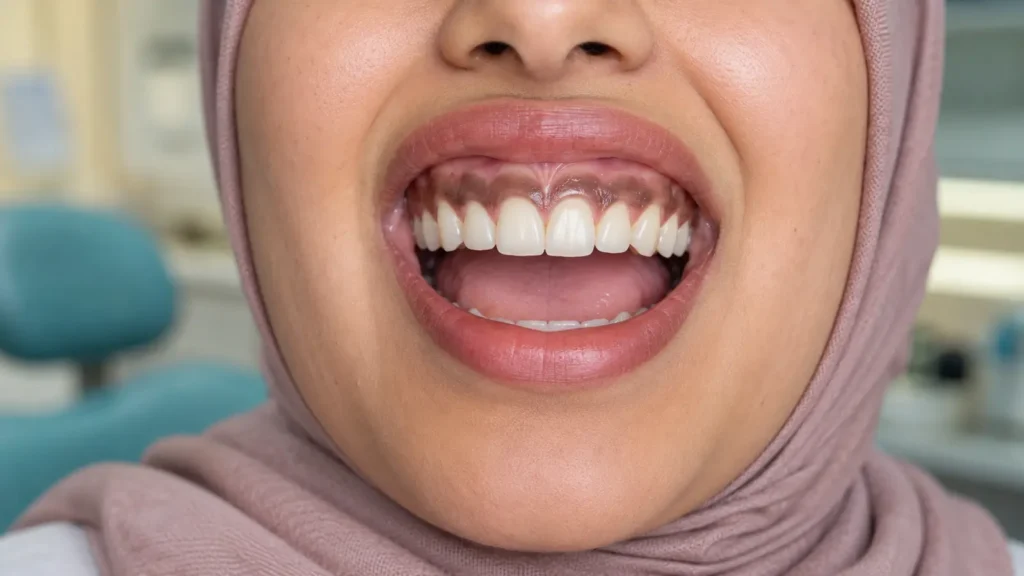
Brown or dark gums are often a normal variation caused by melanin and do not necessarily indicate disease. A new, changing, asymmetric or ulcerated pigmented area, however, should be diagnosed before any cosmetic procedure is considered.
What is the condition?
Gingival pigmentation is increased or altered colour within the gum tissue. Physiological pigmentation is usually diffuse, symmetric and stable. Other pigmentation can be associated with smoking, medication, deposited material or local and systemic conditions.
Symptoms and signs
- Diffuse brown or dark areas of gum
- Stable, painless colour in physiological pigmentation
- Aesthetic concern when smiling
- A new, isolated or irregular area that requires broader assessment
Causes and risk factors
- Normal melanin production and genetics
- Smoking
- Certain medicines and systemic conditions
- Embedded metallic particles near older restorations
- Uncommon local pigmented lesions that must be excluded before treatment
When should you see a periodontist?
Seek assessment if colour is new, changing quickly, asymmetric, raised, painful, ulcerated or bleeding. Stable physiological pigmentation is not harmful; treatment is elective and aesthetic.
How is it diagnosed?
Diagnosis considers onset, distribution, medical history and clinical appearance. Cosmetic removal is postponed if features are unusual, and biopsy may be recommended when a lesion cannot be confidently identified clinically.
Treatment options
- No treatment when pigmentation is physiological and acceptable to the patient
- Controlled surgical removal of the pigmented epithelial layer
- Depigmentation with an appropriate dental laser
- Other techniques selected according to gum thickness, colour and treatment area
- Smoking cessation to improve oral health and reduce associated pigmentation
Recovery and expected outcomes
The treated surface may feel sensitive and develop a temporary film before new epithelium matures over the following weeks. Some repigmentation can occur over time; timing varies with biology, smoking and technique.
Prevention and daily care
- Physiological pigment does not need prevention
- Avoid tobacco
- Protect the site and follow postoperative instructions
- Have any new colour change diagnosed rather than treating it cosmetically first
Related articles
- Conditions we treat
- Gummy Smile: Causes and Gum-Contouring Options in Dubai
- Gum Recession: Causes, Root Coverage and Gum Grafting in Dubai
Frequently asked questions
Are dark gums unhealthy?
Usually not. Physiological melanin is common, but a new or changing area needs examination.
Is gum depigmentation permanent?
Results can last for years, but recurrence is possible and cannot be completely prevented.
Is laser always the best method?
Laser offers useful control and haemostasis, but the best method depends on anatomy, clinician experience and patient goals.
When will I see the final colour?
The appearance becomes clearer as the surface heals and matures during the first few weeks.
Medical notice: This information is educational and does not replace a clinical examination. Treatment, recovery and outcomes vary with the diagnosis and the patient’s health.