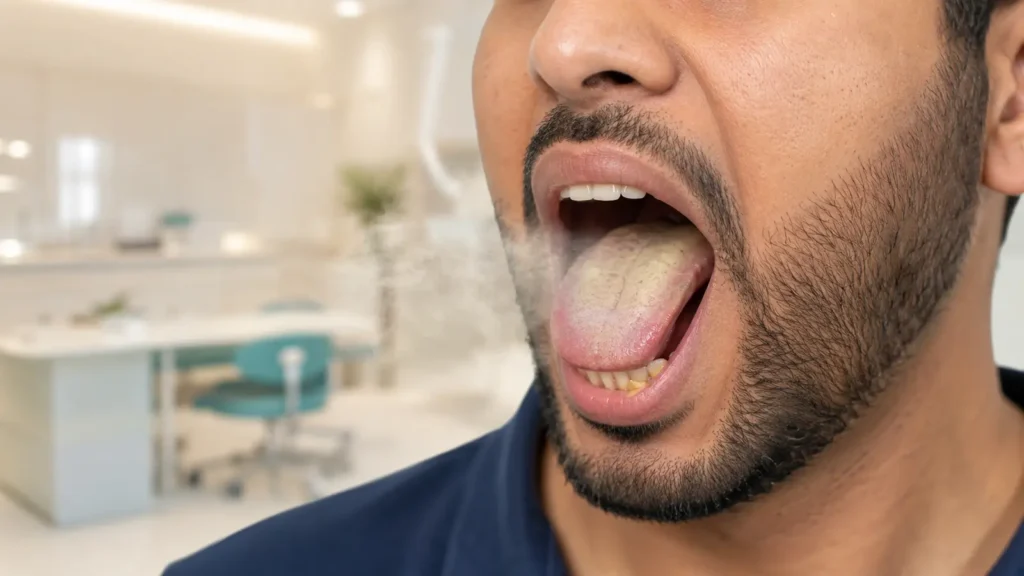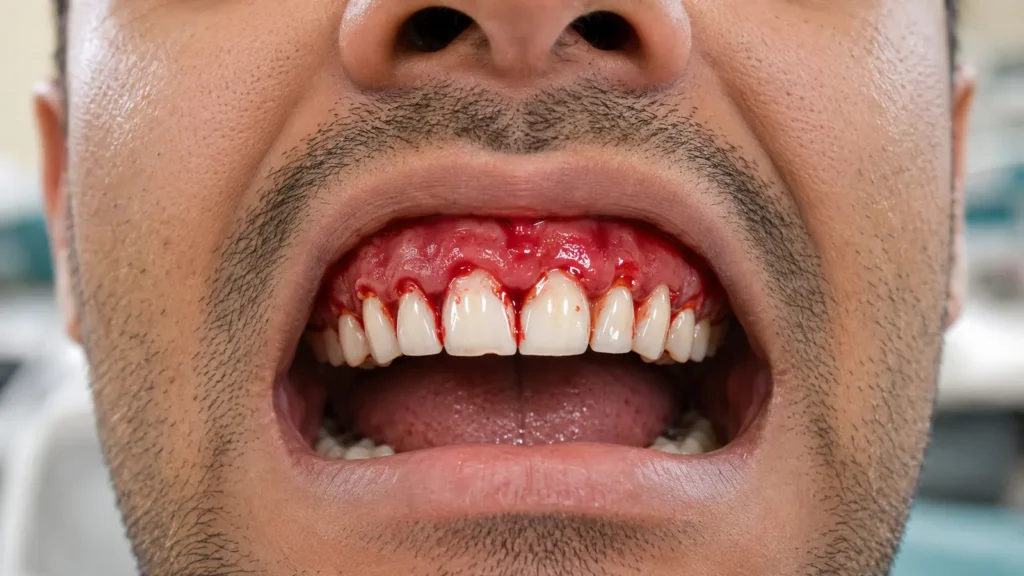

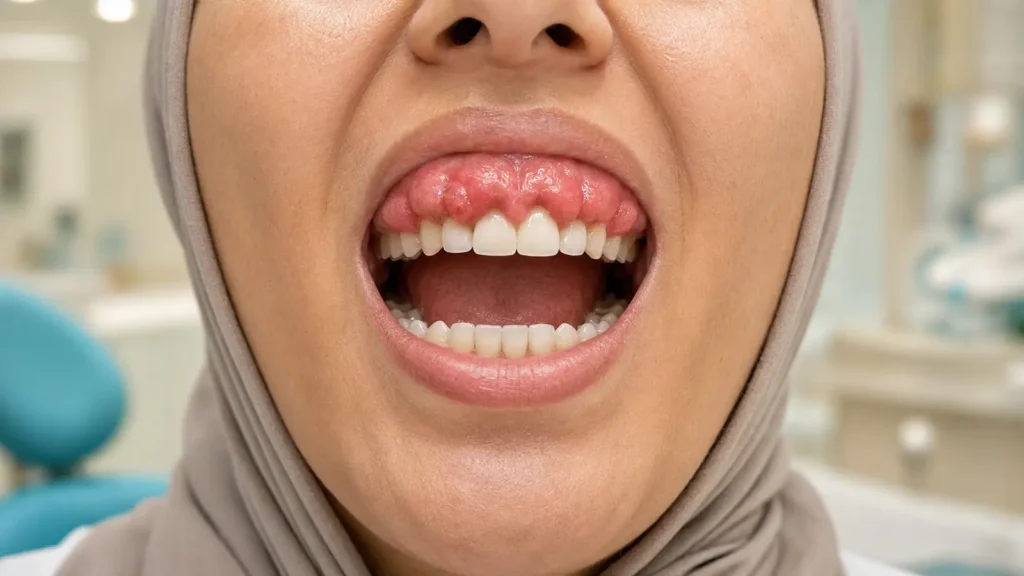
Gum swelling may affect one tooth or a wide area. It can reflect superficial plaque-related inflammation, but a localised swelling may be an abscess requiring prompt care. Appearance alone is not enough to identify the cause; pain, drainage, tooth health and bone support all influence treatment.
What is the condition?
Swollen gums are enlarged tissues that may look red, shiny or tender. Swelling can be inflammatory, infectious, medication-related, hormonal or caused by persistent local irritation.
Symptoms and signs
- Puffy, red or shiny gums
- Tenderness during touch or chewing
- Bleeding during cleaning
- A local lump, pus or a bad taste
- Bad breath or difficulty cleaning the area
Causes and risk factors
- Plaque-induced gingivitis and calculus
- Periodontal or tooth-related abscess
- Food impaction or an overhanging restoration
- Inflammation around a wisdom tooth or implant
- Medicines associated with gingival enlargement
- Pregnancy, hormonal change or systemic factors affecting inflammation
When should you see a periodontist?
Book an early examination for painful, localised, persistent or recurrent swelling. Seek urgent care if fever, rapidly spreading facial or neck swelling, difficulty swallowing or breathing, or marked restriction in mouth opening develops.
How is it diagnosed?
The clinician identifies whether the source is periodontal, dental or another tissue. Examination can include periodontal probing, checking for drainage and food impaction, radiographs, and tooth-vitality testing.
Treatment options
- Professional cleaning for plaque-induced gingivitis
- Subgingival debridement for periodontitis
- Drainage and elimination of the source when an abscess is present
- Treatment of the responsible tooth, wisdom tooth or implant
- Medication review with the prescribing physician where relevant
- Antibiotics only for defined indications; they are not a substitute for local treatment
Recovery and expected outcomes
Simple inflammatory swelling may reduce within days after the cause is removed. Abscesses require follow-up to confirm resolution. Drug-related enlargement and chronic periodontal disease need longer-term control and maintenance.
Prevention and daily care
- Clean the gumline and between teeth every day
- Do not squeeze or puncture a swelling at home
- Correct food traps and defective restorations
- Attend risk-based periodontal maintenance
- Control diabetes and avoid smoking
Related articles
- Conditions we treat
- Bleeding Gums: Causes, Treatment and When to See a Periodontist in Dubai
- Gum Infection Around a Wisdom Tooth: Symptoms and Treatment
Frequently asked questions
Does swollen gum always mean an abscess?
No. It may be gingivitis, but a tender local lump or pus makes an abscess more likely.
Do I need antibiotics?
Not always. Drainage or removal of the source is central; antibiotics are used only when clinically indicated.
Can swelling disappear on its own?
Symptoms may settle while the cause remains, so recurrent or persistent swelling needs examination.
Is swollen gum contagious?
The condition is not transmitted like a respiratory infection, although oral bacteria can be shared and individual susceptibility remains important.
Medical notice: This information is educational and does not replace a clinical examination. Treatment, recovery and outcomes vary with the diagnosis and the patient’s health.