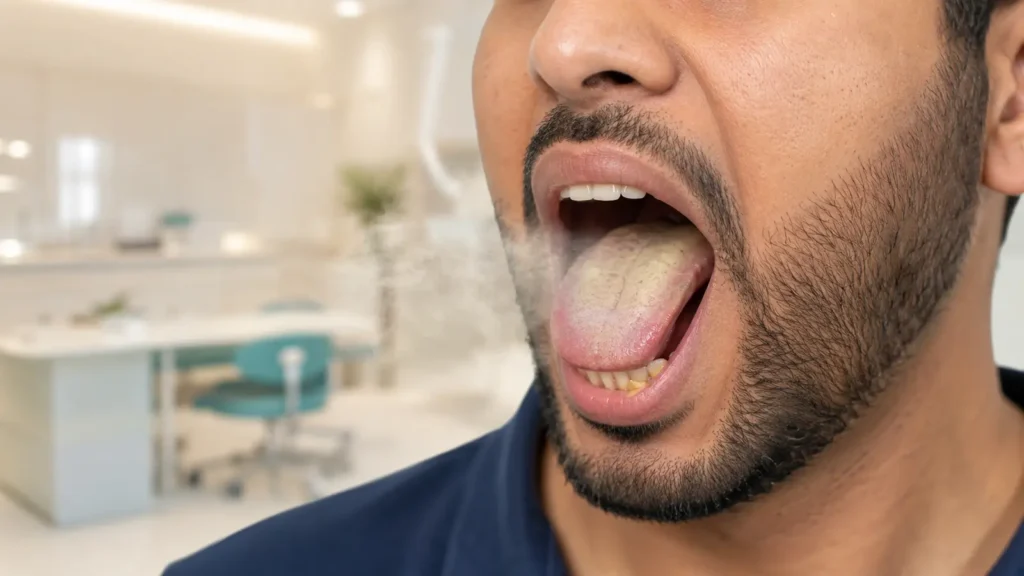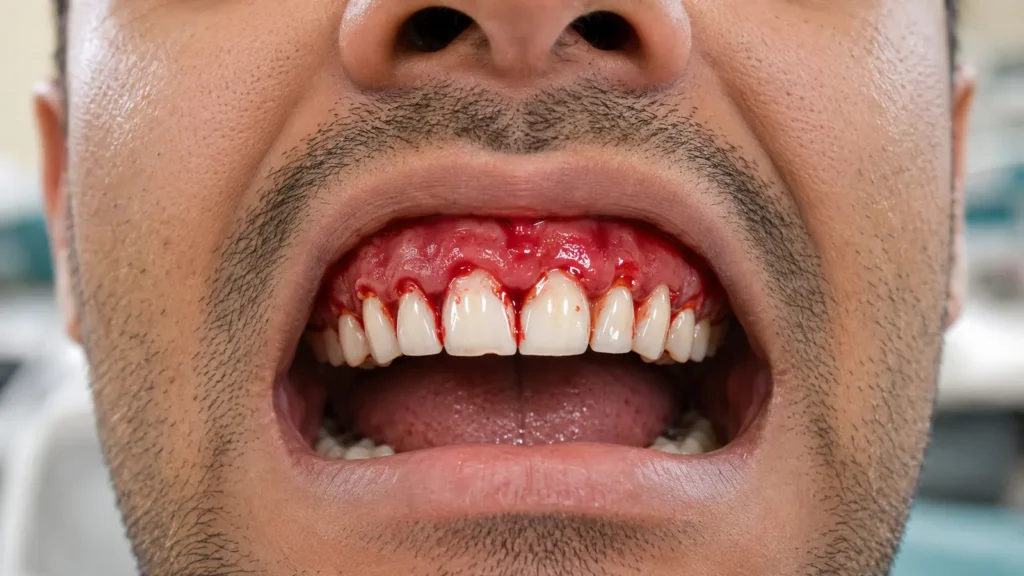

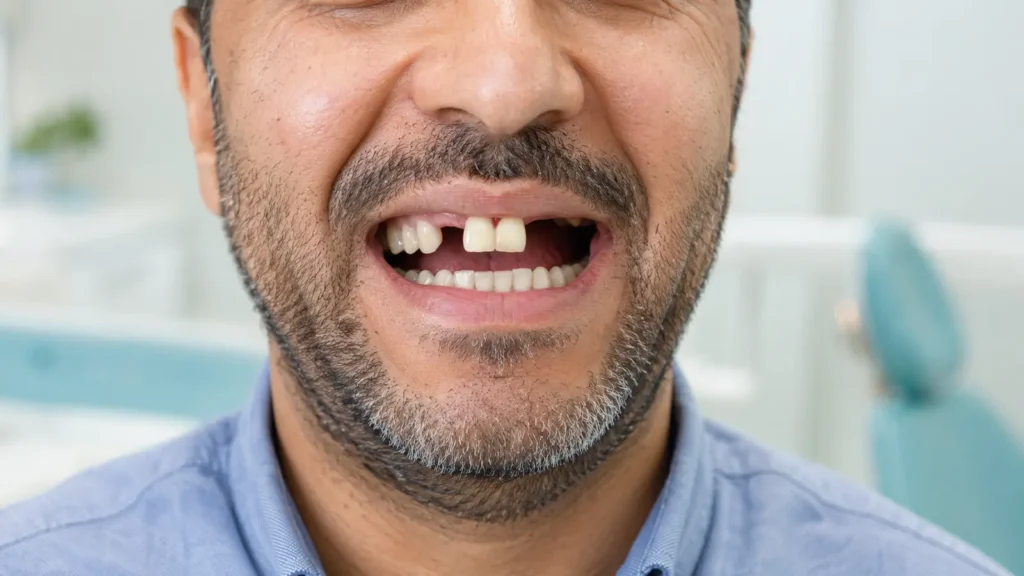
One missing tooth can affect chewing, appearance and bite balance, while neighbouring teeth may drift over time. There is no single best replacement for everyone. The cause of loss, periodontal health, bone, adjacent teeth and personal priorities all shape the decision.
What is the condition?
Tooth loss may be partial or complete and can result from non-restorable decay, periodontitis, fracture, trauma or treatment failure. The cause should be controlled before replacement to reduce the risk of further loss.
Symptoms and signs
- A visible space or reduced chewing efficiency
- Drifting or tilting of neighbouring teeth
- Over-eruption of the opposing tooth
- Changes in speech or smile confidence
- Progressive bone-volume reduction in the empty site
Causes and risk factors
- Non-restorable tooth decay
- Periodontitis and loss of bone support
- Fracture and trauma
- Failed previous treatment or root fracture
- Congenitally missing teeth
When should you see a periodontist?
Assessment soon after loss or extraction is useful, especially when an implant is considered, because bone and soft-tissue dimensions change over time. Pain, swelling or continued bleeding after a recent extraction needs review.
How is it diagnosed?
The gums, remaining teeth, bite and available space are assessed. Radiographs are required, and three-dimensional imaging may be used for implant planning and evaluation of bone, nerves and sinuses.
Treatment options
- Leave and monitor the space only in selected situations
- A dental implant and crown without preparing adjacent teeth
- A fixed bridge supported by neighbouring teeth
- A resin-bonded bridge for selected anterior spaces
- A removable partial or complete denture
- Bone or soft-tissue grafting when reconstruction is required
- A staged plan combining periodontal, orthodontic and restorative care
Recovery and expected outcomes
A bridge may be completed over several weeks depending on complexity. Implant integration time varies with bone, stability and additional procedures, and a provisional tooth may be used. Bone grafting extends treatment. Timing should be presented as an estimate after examination.
Prevention and daily care
- Treat decay and gum disease early
- Use sports protection where appropriate
- Do not ignore a space that affects the bite
- Clean prostheses and implants carefully
- Maintain the remaining teeth with regular care
Related articles
- Conditions we treat
- Peri-Implantitis: Signs, Bone Loss and Treatment in Dubai
- Periodontal Pockets: Causes, Measurement and Treatment in Dubai
Frequently asked questions
Must every missing tooth be replaced?
Not always, but the functional, bite and bone effects should be assessed.
Implant or bridge?
An implant avoids relying on adjacent teeth but requires surgery and suitable bone. A bridge may be preferable depending on tooth condition and timing.
Does an implant prevent bone loss?
It transmits load to bone and may help preserve the site, but it does not automatically restore all lost volume.
How long do implants and bridges last?
No lifespan is guaranteed. Hygiene, smoking, diabetes, bite forces and maintenance all influence survival.
Medical notice: This information is educational and does not replace a clinical examination. Treatment, recovery and outcomes vary with the diagnosis and the patient’s health.