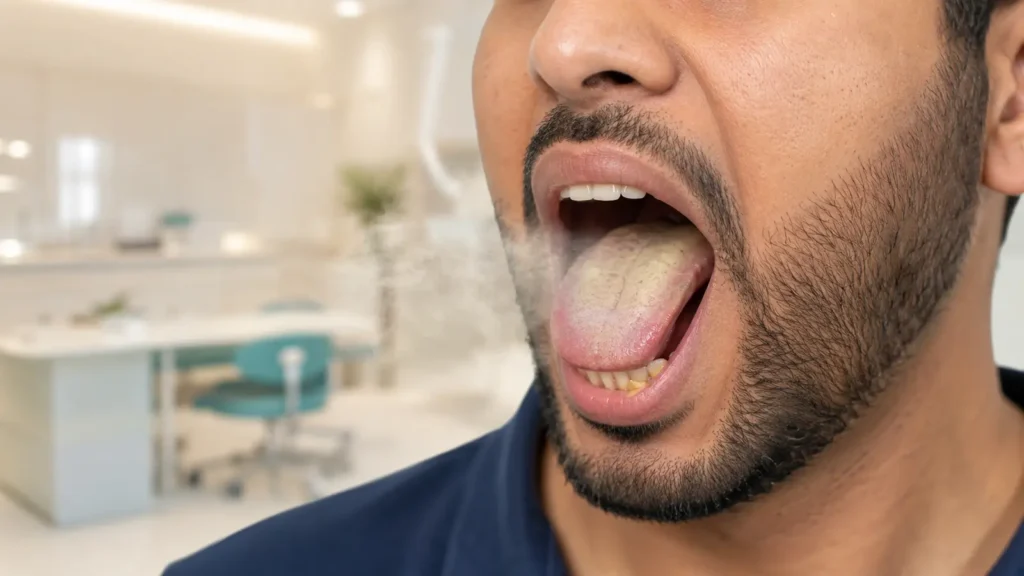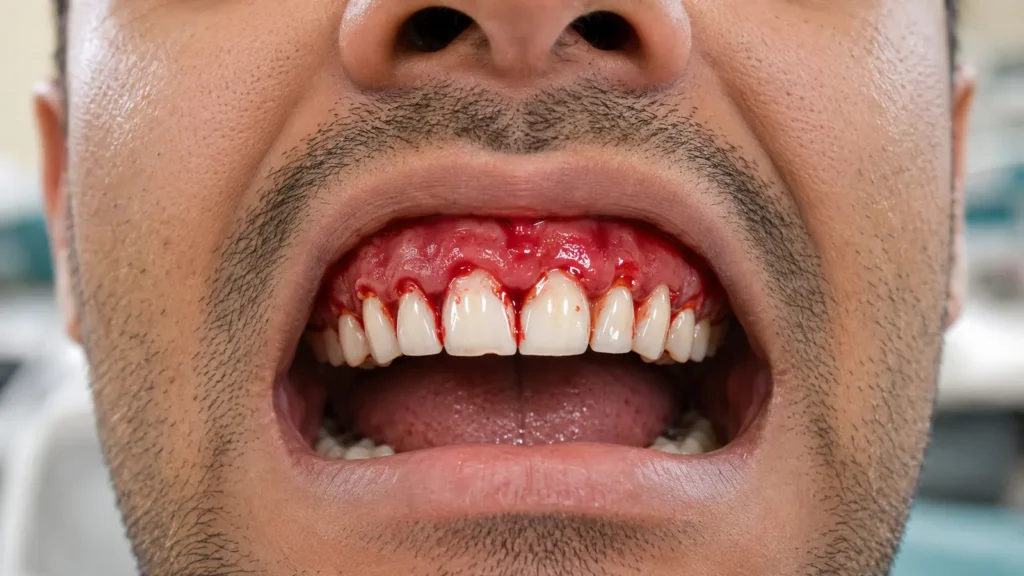

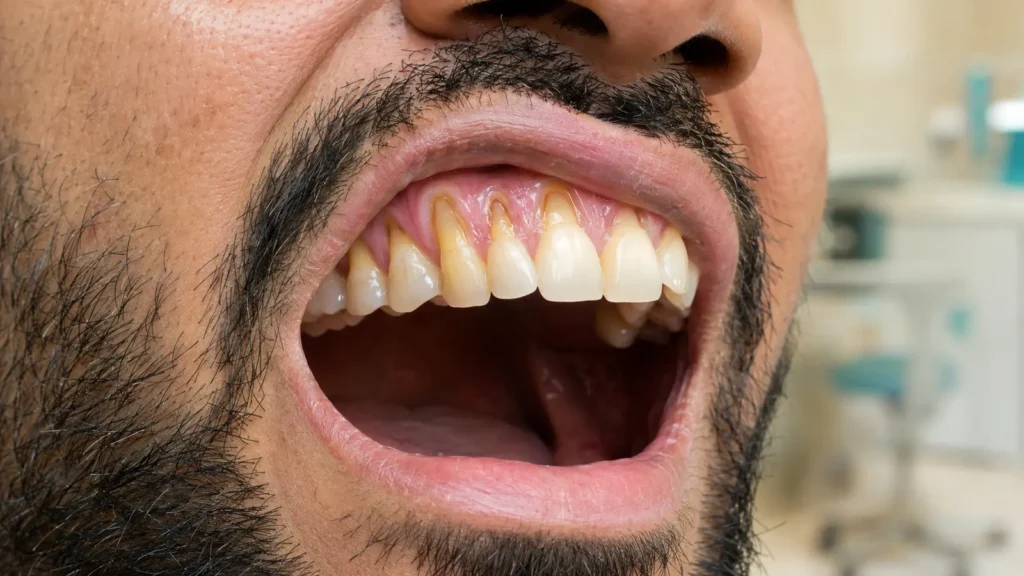
A tooth root is not designed for oral exposure in the same way as enamel. Its covering is less resistant, so exposure can cause sensitivity, wear and root decay. An exposed root is a consequence rather than a complete diagnosis; treatment begins by identifying why gum was lost.
What is the condition?
Root exposure occurs when the gingival margin recedes or interdental tissues are lost. The root often looks darker or more yellow than the crown, and a step may be felt at the enamel-root junction.
Symptoms and signs
- Short sharp pain with cold, sweet food or touch
- Yellow colour close to the gumline
- A longer-looking tooth
- A worn area or cavity on the root
- Difficulty cleaning comfortably
Causes and risk factors
- Traumatic or inflammatory gum recession
- Forceful brushing and highly abrasive toothpaste
- Periodontitis and bone loss
- Tooth position and thin tissues
- Acid erosion or grinding as contributing factors
When should you see a periodontist?
Examination is important for persistent or spontaneous sensitivity, a cavity, colour change or biting pain. Pain that lingers after cold can indicate pulpal disease rather than simple root sensitivity.
How is it diagnosed?
The root surface, recession, decay and wear are examined. Sensibility and bite tests may be used, and periodontal probing and radiographs help determine whether gum disease is contributing.
Treatment options
- Regular use of desensitising toothpaste
- Professional fluoride or sealing agents
- A restoration when decay or structural loss is present
- Correction of brushing, dietary acid and traumatic habits
- Gum grafting and root coverage for suitable sites
- Root-canal treatment only when pain originates inside the tooth
Recovery and expected outcomes
Desensitising care may require repeated applications or several weeks. After gum grafting, the site is protected initially and colour and texture continue to blend over several months.
Prevention and daily care
- Use a gentle brushing technique
- Choose suitable fluoride toothpaste and avoid excess abrasion
- Reduce the frequency of acidic drinks
- Manage recession before it progresses
- Monitor exposed roots for decay
Related articles
- Conditions we treat
- Gum Recession: Causes, Root Coverage and Gum Grafting in Dubai
- Periodontal Pockets: Causes, Measurement and Treatment in Dubai
Frequently asked questions
Does an exposed root mean the tooth will die?
No, but it is more vulnerable to sensitivity and decay and should be protected.
Is a filling or gum graft better?
The choice depends on decay or wear, recession depth, aesthetics and root-coverage potential.
Will sensitivity toothpaste regrow gum?
No. It reduces sensitivity but does not replace lost tissue.
Is all sensitivity caused by exposed roots?
No. Decay, cracks and pulpal disease are other possibilities that require diagnosis.
Medical notice: This information is educational and does not replace a clinical examination. Treatment, recovery and outcomes vary with the diagnosis and the patient’s health.