
Temporary morning breath is common, but odour that returns quickly after cleaning needs a source-based assessment. Most genuine cases originate in the mouth, particularly from tongue coating, plaque, gingivitis or periodontal pockets. Dry mouth, smoking and less common nasal or systemic causes may contribute.
What is the condition?
Halitosis is an unpleasant odour in exhaled air. Oral malodour commonly results from volatile sulphur compounds released when bacteria break down proteins within tongue coating, periodontal pockets and food-retentive areas.
Symptoms and signs
- Odour noticed by others or returning after cleaning
- Unpleasant taste or dry mouth
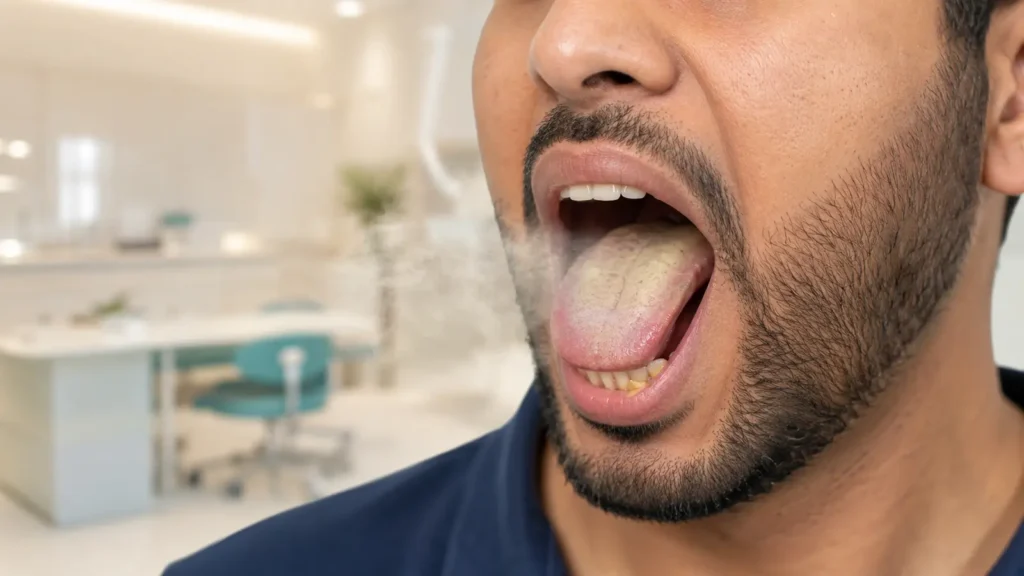
- A thick coating on the back of the tongue
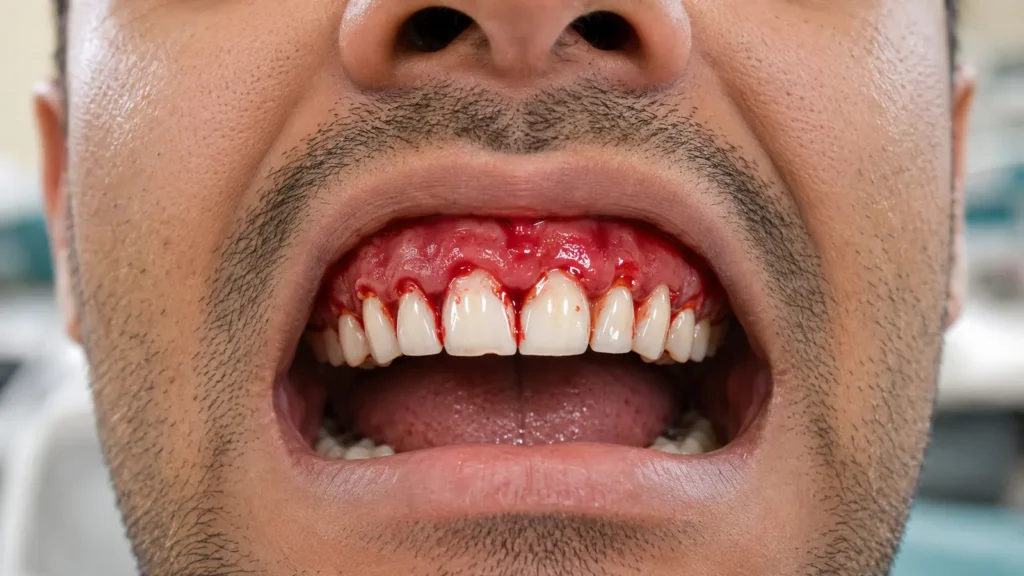
- Bleeding or swollen gums
- Food trapping or post-nasal discharge
Causes and risk factors
- Tongue coating and ineffective oral hygiene
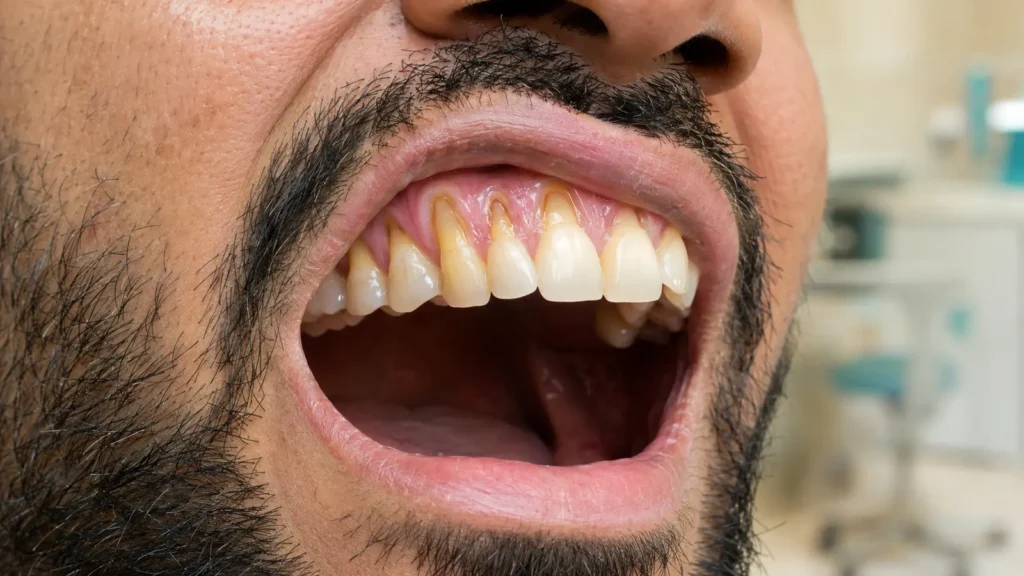
- Gingivitis and periodontal pockets
- Dry mouth related to medicines, mouth breathing or dehydration
- Decay, abscesses or plaque-retentive dental work
- Smoking and certain foods
- Less common nasal, respiratory or systemic sources
When should you see a periodontist?
See a dentist if odour persists for more than two weeks despite thorough cleaning or accompanies bleeding, pain or marked dryness. If oral causes are excluded, referral to a physician or ENT specialist may be appropriate.
How is it diagnosed?
The history covers timing, medicines and habits. The tongue, gums, teeth and saliva are examined. Organoleptic assessment or sulphur-monitoring devices may be used in some clinics, but identifying and treating the source is central.
Treatment options
- Gentle daily cleaning of the tongue
- Effective brushing and interdental cleaning
- Calculus removal and periodontal treatment
- Treatment of decay, abscess and food traps
- Management of dry mouth and its cause
- Targeted mouthrinse for an appropriate period rather than simply masking odour
- Medical referral when no oral source is found
Recovery and expected outcomes
Odour related to tongue coating and plaque may improve within days of effective control. Periodontal treatment requires several weeks and review. Persistent odour after oral treatment warrants reassessment.
Prevention and daily care
- Clean the tongue, teeth and interdental spaces daily
- Maintain hydration and address dry mouth
- Clean removable appliances
- Avoid tobacco
- Attend routine examinations rather than relying on mints
Related articles
- Conditions we treat
- Bleeding Gums: Causes, Treatment and When to See a Periodontist in Dubai
- Periodontal Pockets: Causes, Measurement and Treatment in Dubai
Frequently asked questions
Is the stomach the usual cause?
No. Most persistent genuine halitosis originates within the mouth, especially the tongue and gums.
How can I test my own breath?
Self-assessment is unreliable; ask a trusted person or seek professional assessment.
Is mouthwash enough?
It can mask odour temporarily but cannot treat calculus, pockets or persistent dryness.
Should everyone clean the tongue?
It is particularly useful when coating is present, but cleaning should be gentle.
Medical notice: This information is educational and does not replace a clinical examination. Treatment, recovery and outcomes vary with the diagnosis and the patient’s health.