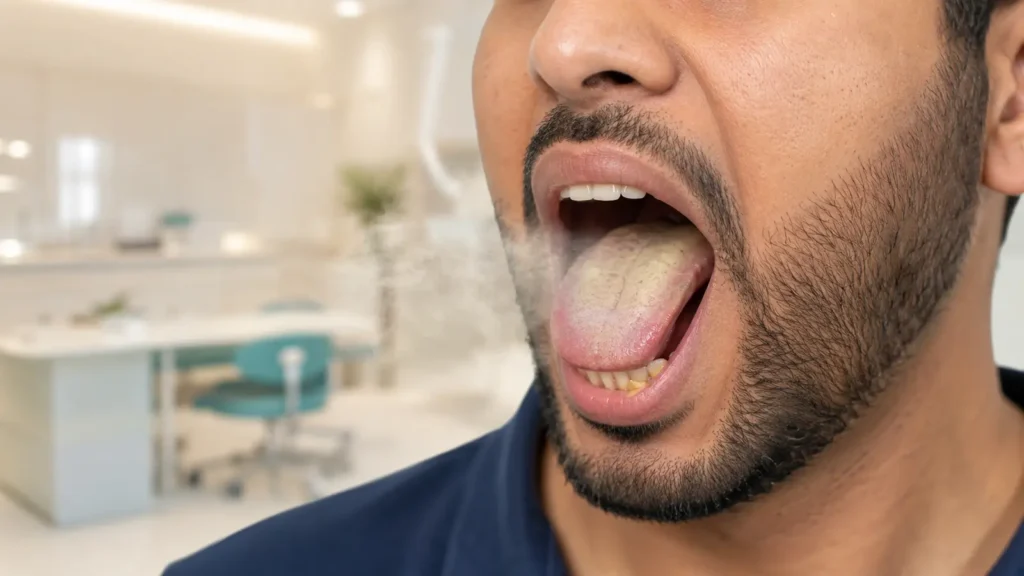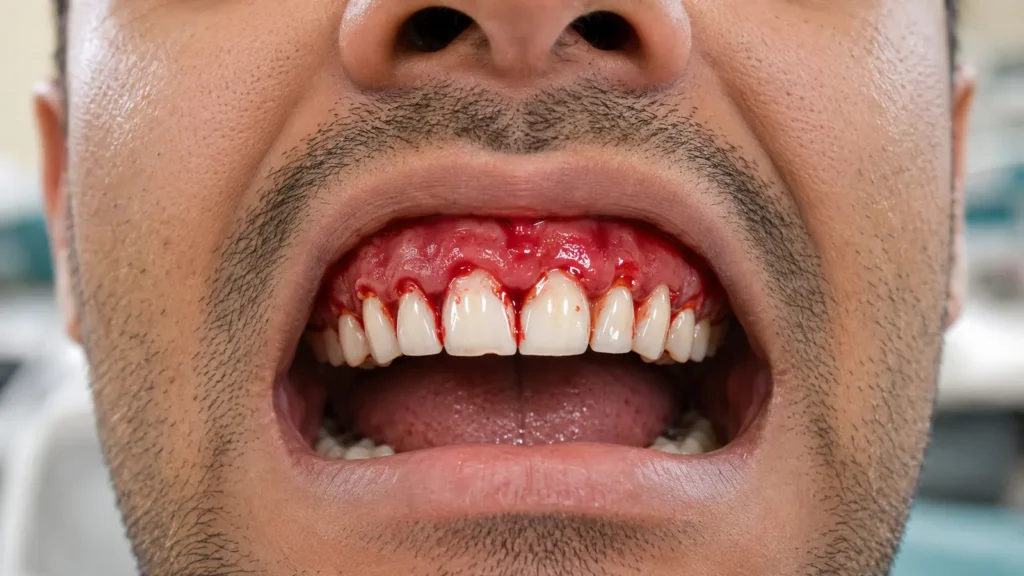

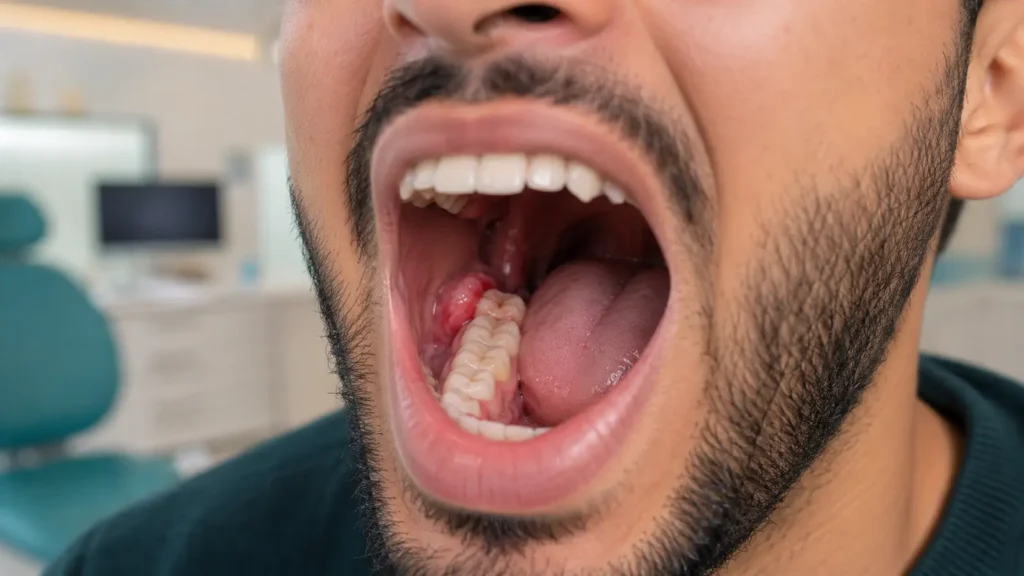
When a wisdom tooth erupts only partly, a flap of gum may remain over its chewing surface. Food and plaque can collect beneath this flap and cause pericoronitis. The episode may remain localised or spread and restrict mouth opening.
What is the condition?
Pericoronitis is inflammation or infection of soft tissue around the crown of a partially erupted tooth, most often a lower wisdom tooth. Recurrence is associated with difficult cleaning and inadequate space for complete eruption.
Symptoms and signs
- Pain and swelling behind the last molar
- Pain when chewing or biting on the gum flap
- Bad taste, odour or pus
- Restricted mouth opening
- Pain radiating toward the ear or throat
- Facial swelling or fever when infection spreads
Causes and risk factors
- Partial eruption and food trapped under the gum flap
- Limited space or tooth impaction
- Trauma from the opposing upper tooth
- Difficult access for cleaning
- Temporary reduction in host resistance or recurrent inflammation
When should you see a periodontist?
Arrange prompt assessment for pain and swelling. Seek urgent care for difficulty swallowing or breathing, spreading swelling, fever, rapid deterioration or marked limitation in mouth opening.
How is it diagnosed?
Examination assesses the tooth, gum flap, drainage, mouth opening and lymph nodes. Radiographs show tooth angulation, available space and effects on the neighbouring molar. Three-dimensional imaging is reserved for selected surgical cases.
Treatment options
- Irrigation and removal of debris beneath the flap
- Gentle cleaning instruction with suitable tools
- Pain relief appropriate to medical history
- Drainage and management of traumatic factors
- Antibiotics for spreading infection or systemic signs, not routinely for every episode
- Extraction after control of the acute phase when episodes recur or complete eruption is unlikely
- Removal of the gum flap in selected cases with adequate eruption space
Recovery and expected outcomes
A mild episode may improve within days after local cleaning, but can recur while the flap remains. After extraction, swelling commonly peaks at 48–72 hours and then declines; recovery varies with surgical difficulty and patient factors.
Prevention and daily care
- Clean the back of the mouth carefully
- Seek assessment when symptoms begin to recur
- Do not place aspirin or caustic substances on the gum
- Avoid automatic prophylactic removal; decisions should reflect documented disease and individual risk
Related articles
- Conditions we treat
- Swollen Gums: Causes, Treatment and Warning Signs
- Persistent Bad Breath: Causes, Diagnosis and Treatment in Dubai
Frequently asked questions
Does every wisdom tooth need removal?
No. A healthy, cleanable tooth may be monitored; recurrent infection or documented damage may justify extraction.
Will antibiotics permanently solve it?
They may control spreading infection but do not remove the flap or lack of space causing recurrence.
Can the tooth be removed during infection?
Sometimes yes; in other cases the acute episode is controlled first. The decision is clinical.
When is it an emergency?
Difficulty breathing or swallowing, spreading swelling, fever or rapid deterioration require urgent care.
Medical notice: This information is educational and does not replace a clinical examination. Treatment, recovery and outcomes vary with the diagnosis and the patient’s health.