
A periodontal pocket is not simply a space that can be cleaned at home. It reflects loss of attachment between gum and tooth and may accompany bone destruction. Pockets can progress with little pain, so diagnosis depends on clinical measurements and radiographs rather than symptoms alone.
What is the condition?
A healthy tooth has a shallow gingival sulcus. In periodontitis, tissues detach from the root and form a deeper pocket that retains bacteria and calculus. Increasing depth and limited access for cleaning raise the risk of persistent inflammation.
Symptoms and signs
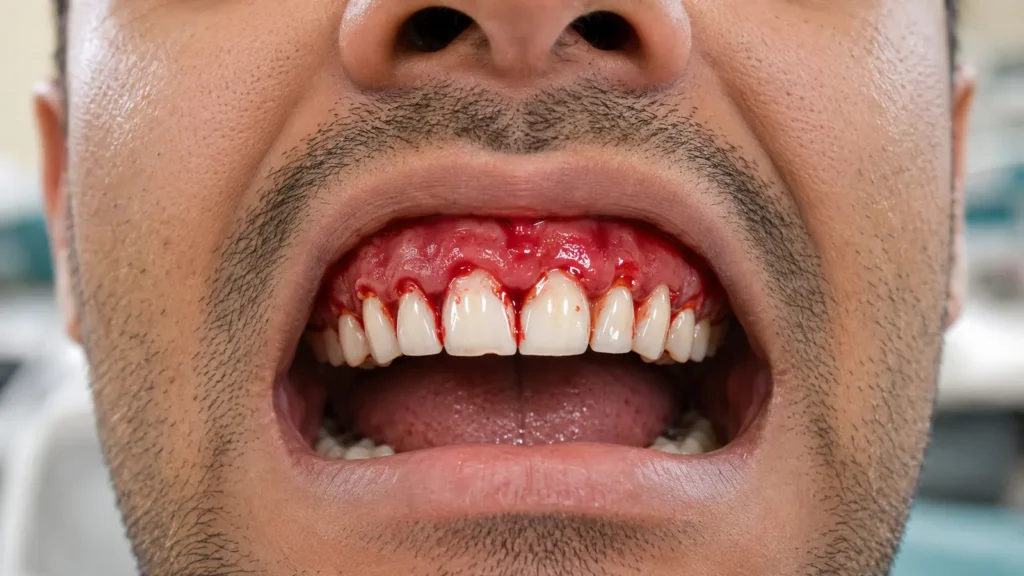
- Bleeding during cleaning or spontaneously
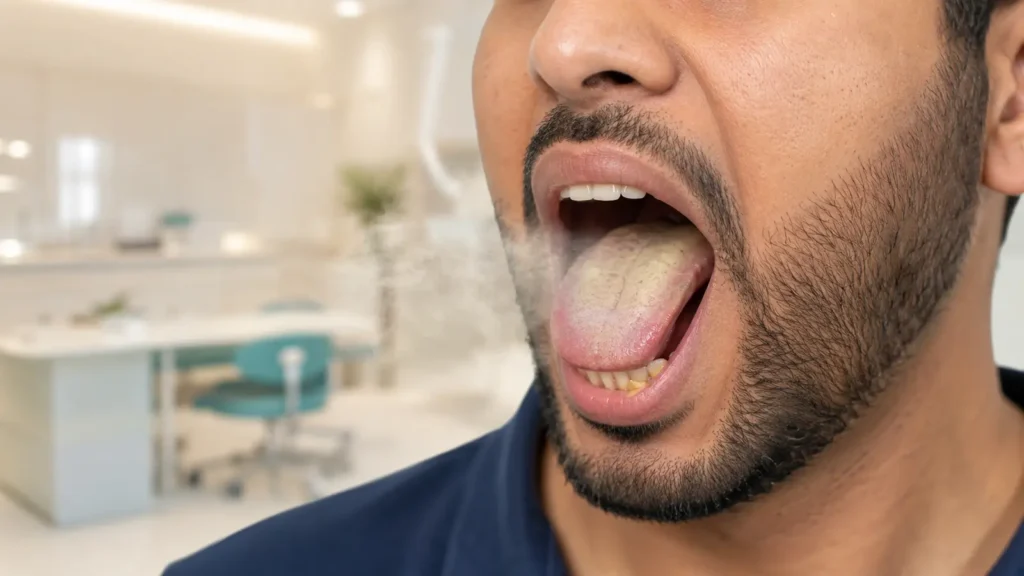
- Persistent odour or unpleasant taste
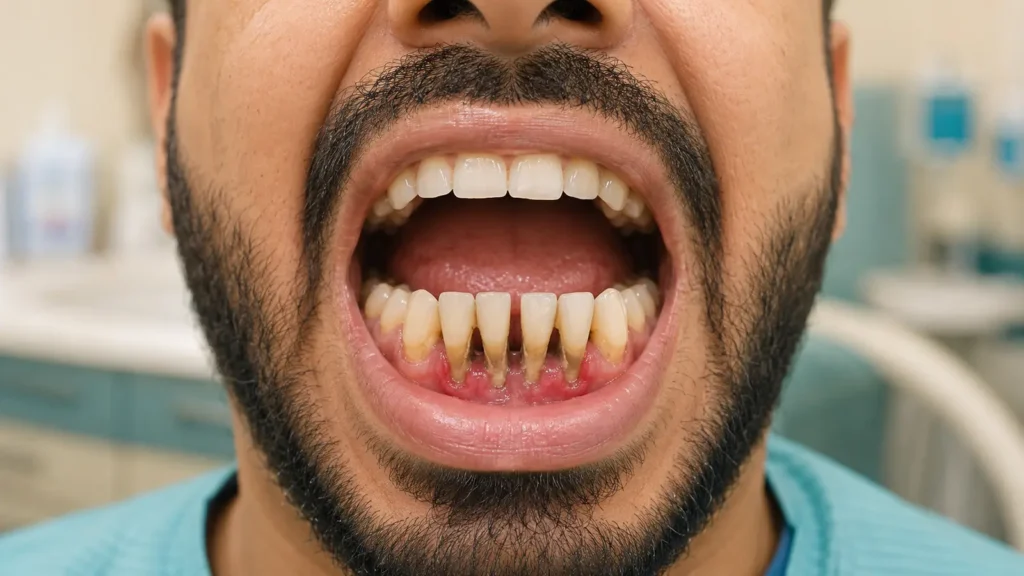
- Recession and longer-looking teeth
- Pus or discomfort when chewing
- Spacing or mobility in advanced disease
- No noticeable symptoms in some patients
Causes and risk factors
- Chronic bacterial biofilm below the gum margin
- Individual susceptibility and genetic factors
- Smoking and poorly controlled diabetes
- Calculus and inaccessible plaque-retentive areas
- Delayed treatment and inadequate maintenance
When should you see a periodontist?
Assessment is appropriate for repeated bleeding, persistent bad breath, recession or mobility. Pocket depth cannot be accurately judged at home, and absence of pain does not confirm healthy bone.
How is it diagnosed?
A periodontal probe records measurements at six sites around each tooth, together with bleeding and recession. Findings are interpreted with radiographs, mobility and furcation involvement to establish periodontitis stage and grade.
Treatment options
- Individualised plaque control and interdental cleaning
- Scaling and root-surface debridement, with local anaesthetic when required
- Reassessment after tissue healing
- Pocket-reduction surgery for inaccessible residual sites
- Regenerative treatment for selected bone defects
- Extraction only when a tooth has a hopeless prognosis
- Supportive periodontal maintenance as an essential part of therapy
Recovery and expected outcomes
Temporary sensitivity or mild discomfort can follow deep cleaning. Swelling and bleeding usually improve over the next several weeks. Surgery requires longer healing and careful aftercare. Not all lost bone can be rebuilt, but disease progression can often be stabilised.
Prevention and daily care
- Remove plaque daily, including between teeth
- Use correctly sized interdental brushes
- Attend maintenance, often every three to six months according to risk
- Stop smoking and optimise diabetes control
- Track clinical measurements rather than relying only on appearance
Related articles
- Conditions we treat
- Bleeding Gums: Causes, Treatment and When to See a Periodontist in Dubai
- Missing Teeth: Effects and Replacement Options in Dubai
Frequently asked questions
What is a normal pocket depth?
Healthy sulci are generally shallow, but measurements must be interpreted with bleeding, recession and bone levels.
Can pockets close without surgery?
Many improve after thorough non-surgical treatment; deep residual pockets may need surgical access.
Can lost bone grow back?
Selected defects can respond to regenerative therapy, but complete replacement of all lost bone is not predictable.
Is periodontitis permanently cured?
It can be controlled, but lifelong maintenance is needed because susceptibility remains.
Medical notice: This information is educational and does not replace a clinical examination. Treatment, recovery and outcomes vary with the diagnosis and the patient’s health.