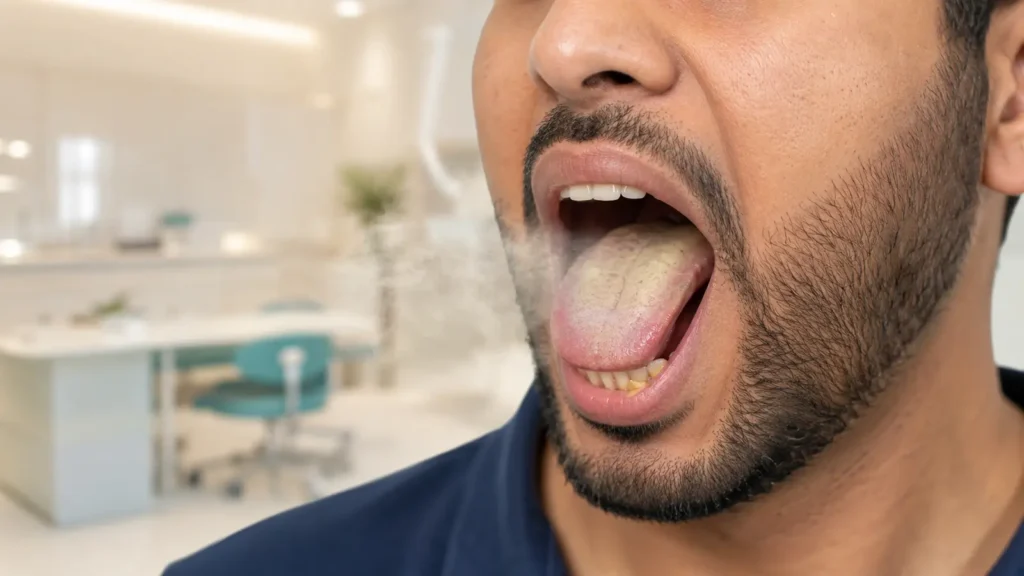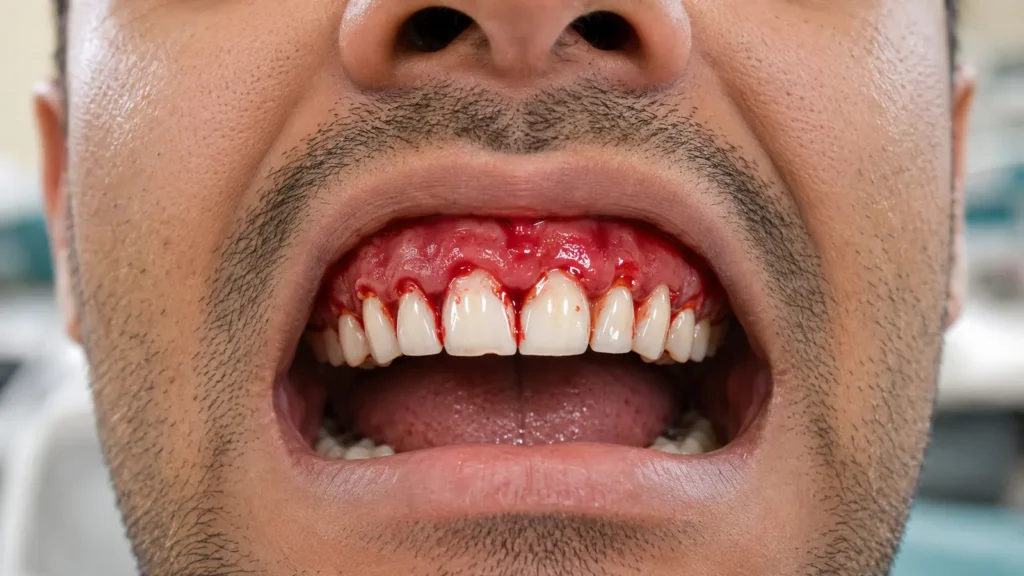

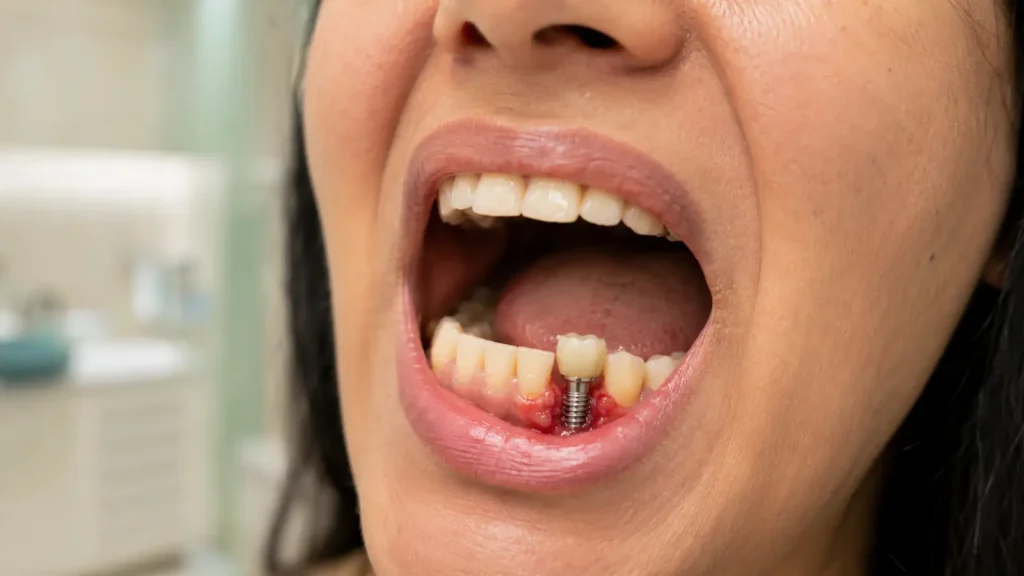
A successful dental implant is not immune to inflammation. Disease may begin with bleeding and swelling in the soft tissue. When progressive supporting-bone loss is also present, the condition is peri-implantitis. Early detection matters because treatment becomes more difficult as bone loss increases.
What is the condition?
Peri-implant mucositis is inflammation confined to the soft tissue without bone loss beyond initial remodelling. Peri-implantitis combines inflammation with progressive loss of supporting bone around the implant.
Symptoms and signs
- Bleeding during brushing or examination
- Redness or swelling around the implant crown
- Pus, unpleasant taste or odour
- Recession with visible metal or implant threads
- Pain or prosthesis movement; movement of the implant body is an advanced sign
Causes and risk factors
- Biofilm and limited cleaning access around the restoration
- Previous history of periodontitis
- Smoking and poorly controlled diabetes
- Lack of professional maintenance
- Implant-position, tissue, prosthetic or residual-cement factors
When should you see a periodontist?
Repeated bleeding or swelling around an implant deserves early assessment even without pain. Pus, rapid change, or movement of the restoration or implant requires prompt review.
How is it diagnosed?
Current pocket depths and bleeding are compared with baseline records, and radiographs assess bone-level change. Prosthesis stability, bite and cleaning access are examined, with differentiation between biological and mechanical complications.
Treatment options
- Improve home access and perform implant-specific professional debridement
- Treat peri-implant mucositis early and reassess response
- Remove plaque-retentive factors or residual cement and modify the restoration where needed
- Surgical access and surface decontamination for advanced disease
- Resective or regenerative procedures according to defect anatomy
- Implant removal when bone loss is severe or the implant is mobile
- Intensive supportive maintenance to limit recurrence
Recovery and expected outcomes
Recovery depends on severity and surgery type. Bleeding and swelling improve first, but long-term success is judged by stable bone and measurements. Outcomes are generally less predictable than treatment around natural teeth, making follow-up essential.
Prevention and daily care
- Clean around the implant daily with tools matched to its design
- Attend examinations and obtain baseline or follow-up radiographs when indicated
- Treat periodontal disease before implant therapy
- Stop smoking and optimise diabetes control
- Do not wait for pain before reporting bleeding
Related articles
- Conditions we treat
- Missing Teeth: Effects and Replacement Options in Dubai
- Bleeding Gums: Causes, Treatment and When to See a Periodontist in Dubai
Frequently asked questions
Can an implant become infected years later?
Yes. Peri-implant disease can develop at any time when risk factors accumulate.
Does bleeding always mean bone loss?
No. It may be mucositis, but radiographs and measurements are needed to identify bone loss.
Can the implant be saved?
Many can be treated; prognosis depends on defect severity and shape, cleaning access and health risks.
Are antibiotics enough?
No. Biofilm removal, surface treatment and correction of the cause are central; antibiotics are adjunctive in selected cases.
Medical notice: This information is educational and does not replace a clinical examination. Treatment, recovery and outcomes vary with the diagnosis and the patient’s health.