

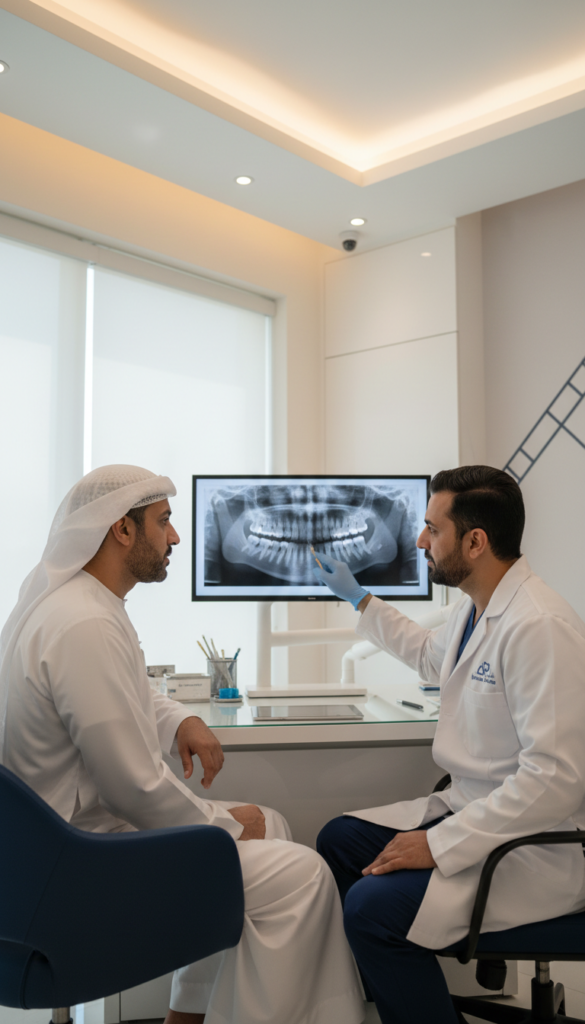
Dental implants failure are among the most advanced and successful solutions in modern dentistry. However, despite high success rates, dental implant failure can occur in certain cases. At Dr. Mohammed Qasem’s clinic in the UAE, we provide expert insight into causes, prevention, and alternatives.
What is Dental Implant Failure?
Dental implant failure refers to the inability of the implant to properly integrate with the jawbone or its loss after initial success.
Types:
- Early failure (within months)
- Late failure (after years)
Symptoms:
- Persistent pain
- Implant mobility
- Gum inflammation
Benefits of Understanding Dental Implant Failure
Studying dental implants failure helps:
- Improve treatment planning
- Prevent complications
- Advance dental techniques
- Educate patients
Who Is at Risk?
High-risk groups include:
- Uncontrolled diabetics
- Heavy smokers
- Patients with low bone density
Ideal candidates:
- Good overall health
- Adequate bone support
- Commitment to oral hygiene
Common Causes
- Insufficient bone
- Infection (peri-implantitis)
- Surgical errors
- Excess pressure
- Systemic health issues
Prevention
At our clinic:
- Comprehensive evaluation
- 3D imaging (CBCT)
- Proper implant selection
- Sterile procedures
- Regular follow-up
Alternatives
If dental implant failure occurs:
- Re-implantation
- Bone grafting
- Dental bridges
- Dentures
- All-on-4 implants
FAQ
- Is failure common? Rare but possible.
- Can implants be redone? Yes.
- Healing time? 3–6 months.
- Is it painful? Minimal discomfort.
Call to Action
Book your consultation with Dr. Mohammed Qasem